
Most Somali Households Are Food Insecure or At Risk
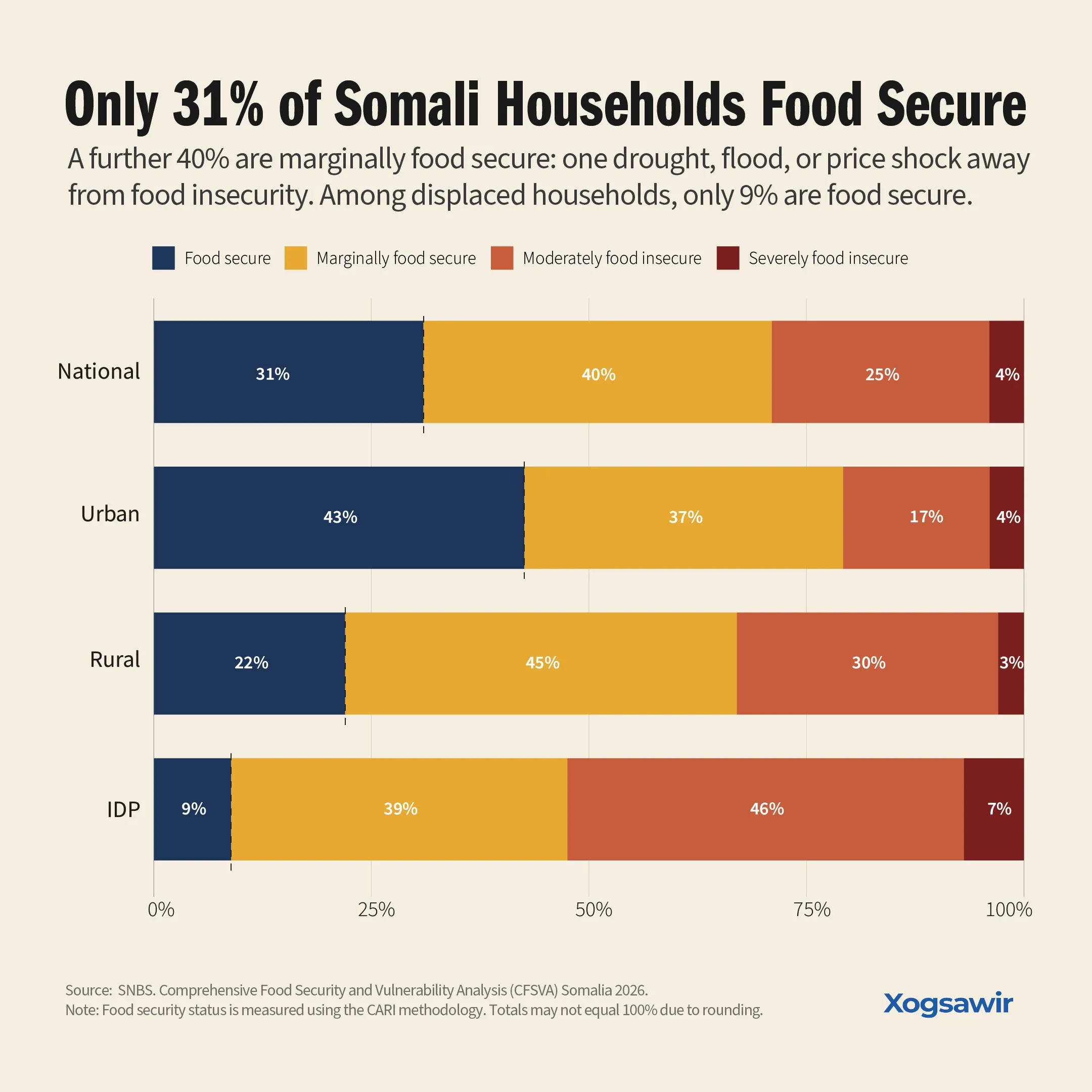
Somalia's food security challenge is as much about vulnerability as it is about hunger. The 2026 Comprehensive Food Security and Vulnerability Assessment (CFSVA) found that only 31 percent of households are food secure. Another 40 percent are classified as marginally food secure: households that can meet their food needs today but remain exposed to droughts, floods, conflict, displacement, and rising prices.
Displacement is the clearest dividing line, with only 9 percent of internally displaced households food secure, compared with 43 percent in urban areas and 22 percent in rural areas. Over half of displaced households are food insecure, the highest share across all population groups.
Food insecurity is not evenly shared. Urban households fare better; rural communities and displaced families carry substantially higher rates of food insecurity. For many households, the line between food security and food insecurity is not current access to food, but the ability to withstand the next shock.
Sources
- Somalia National Bureau of Statistics Comprehensive Food Security and Vulnerability Assessment 2026. Accessed 31 May 2026.
Notes
Food security status is measured using the Consolidated Approach for Reporting Indicators of Food Security (CARI), which combines current food consumption with household coping capacity and economic vulnerability. Survey coverage excludes Middle Juba region and nomadic populations.
Free to share, adapt, and reuse under CC BY 4.0 with attribution to Xogsawir.
Related charts
-
04 OCT 2025
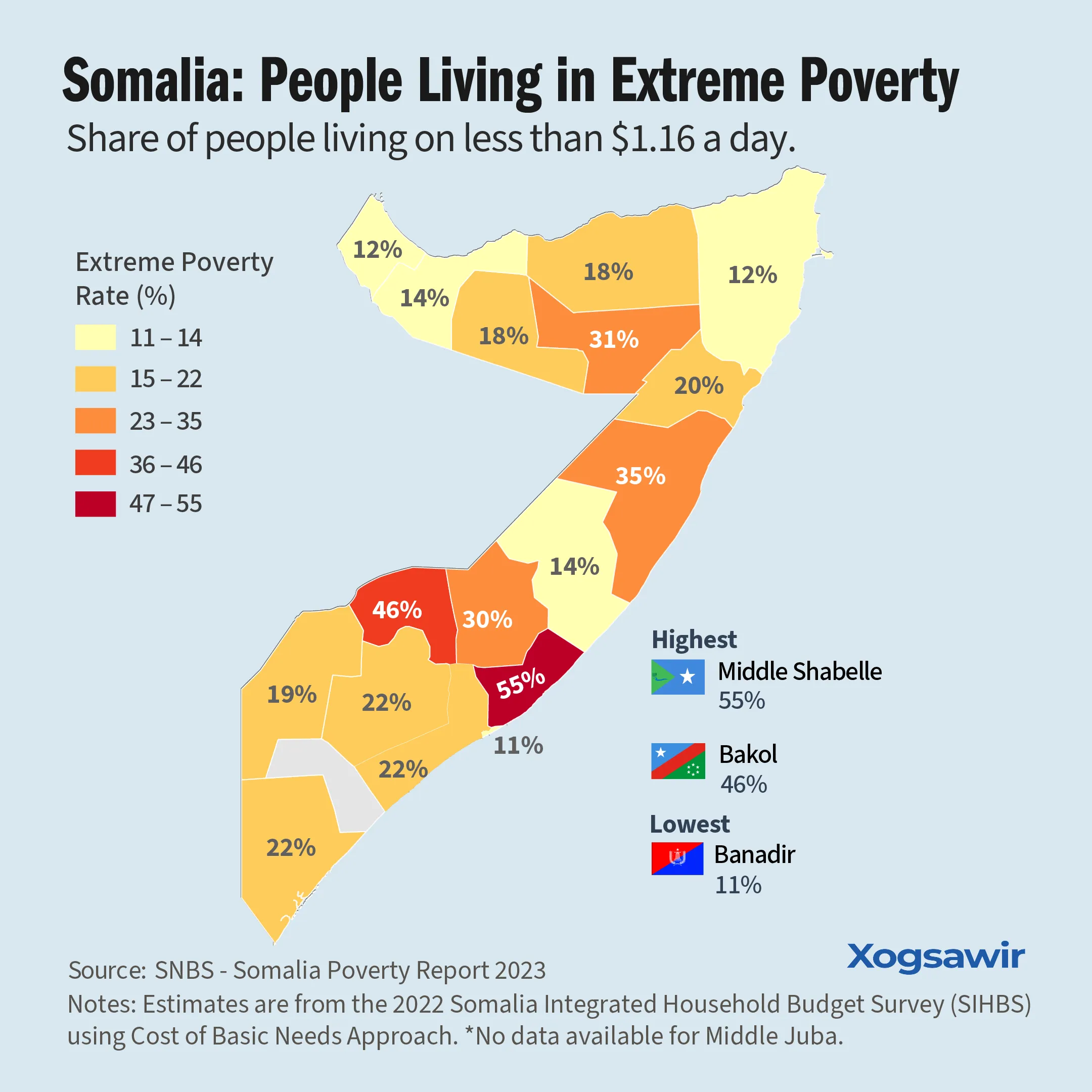
Extreme poverty in Somalia, by region
Up to 55% of people in some rural Somalia survive on less than $1.16 a day.
Health & Demographics Download -
15 OCT 2025
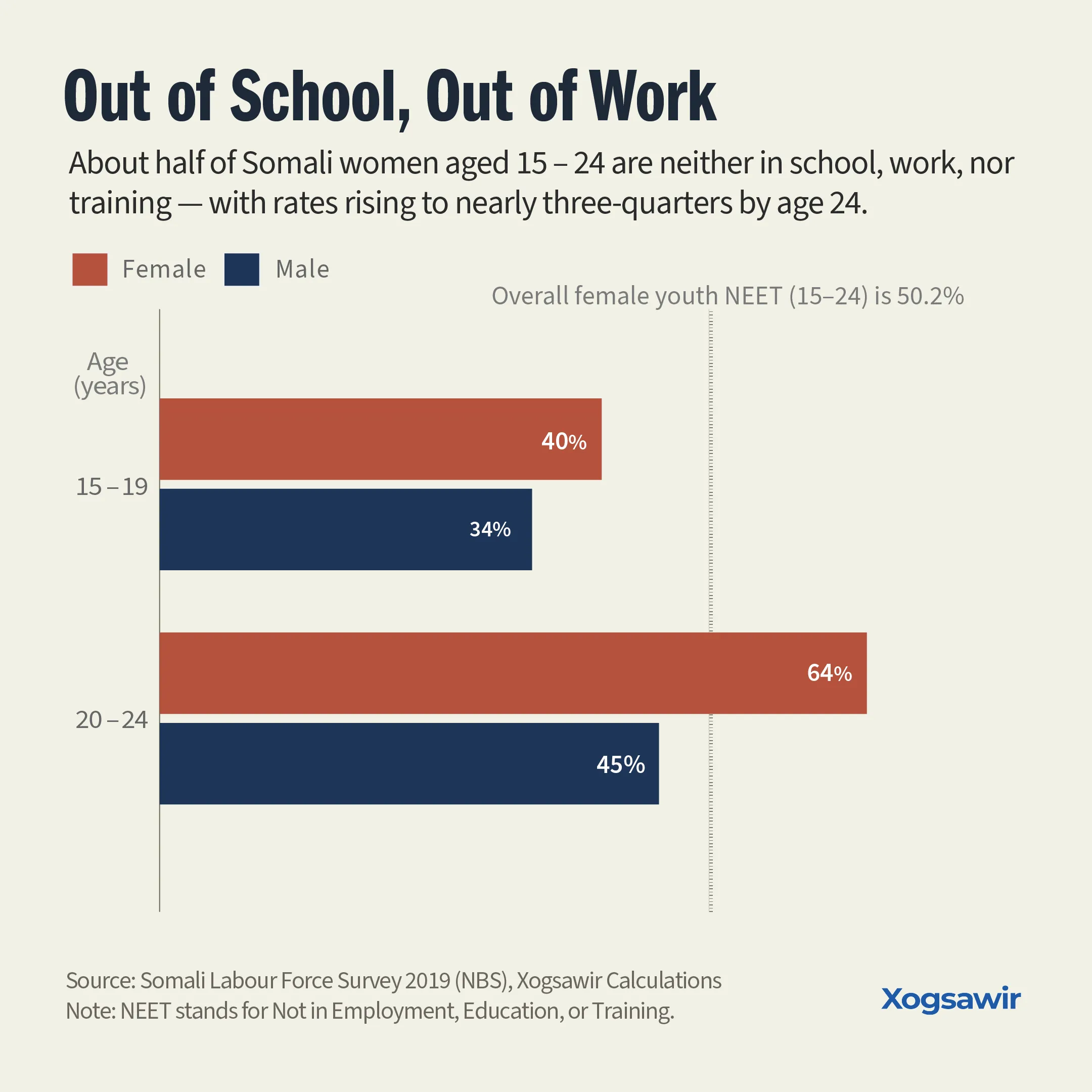
Female youth not in education, employment, or training in Somalia
By age 24, a staggering 64% of young Somali women are out of school and work.
Health & Demographics Download -
29 SEPT 2025
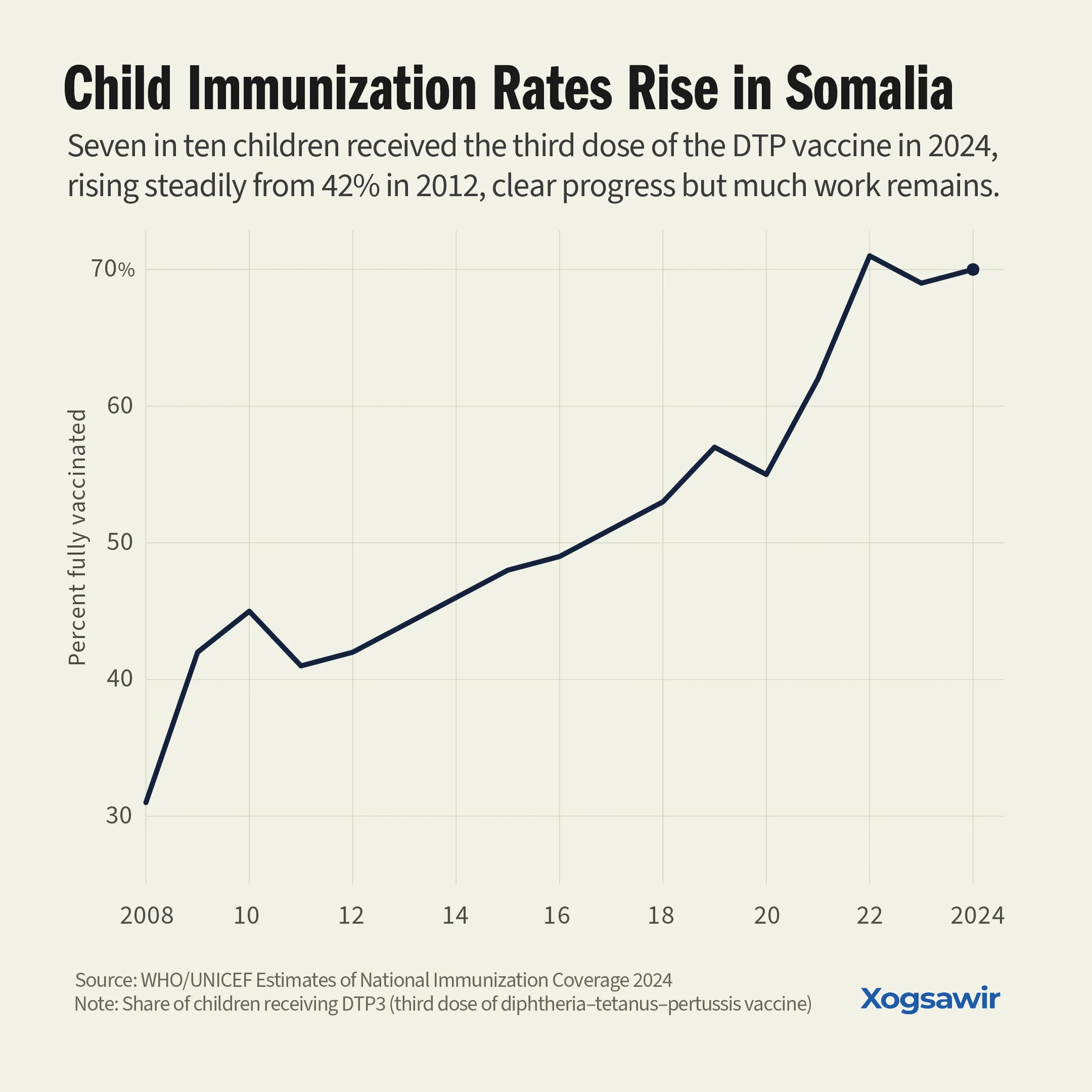
Child immunization coverage in Somalia
Somali child immunization rates surged from 31% in 2008 to 70% in 2024.
Health & Demographics Download


